Curiosities of Platja d'Aro
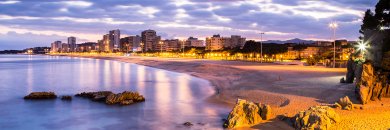
Platja d'Aro is one of those gems on the Costa Brava with two distinct faces: one vibrant and modern, the other filled with charming corners steeped in history.
Here are some fascinating facts you may not know about this special spot in the Baix Empordà:
Although the municipality is officially called Castell-Platja d'Aro, the coastal area was originally known as Fanals d'Aro. It wasn’t until the 1960s, during the tourism boom, that the name was changed to Platja d'Aro to make it more appealing to visitors. A true vintage marketing move!
Hidden in the historic center of Castell d'Aro (just a few kilometers from the beach), you’ll find a unique museum entirely dedicated to dolls. With more than 800 pieces from around the world and different eras, it’s a curious and nostalgic visit that often flies under the radar.
- El Cavall Bernat: a solitary symbol
At the end of the main beach stands a striking 7-meter-high rock monolith known as El Cavall Bernat. It’s the town’s iconic landmark. What makes it even more special? It’s the last remaining fragment of an ancient reef sculpted by the sea over thousands of years.
- Pioneers of luxury tourism
Back in the 1920s, long before large hotels appeared, the neighboring residential development of S'Agaró was created. Designed by architect Rafael Masó in a noucentista style, it became the first major elite tourism project on the Costa Brava. Hollywood legends such as Elizabeth Taylor and Audrey Hepburn once stayed here.
- The most glamorous stretch of the Camino de Ronda
The section of the Camino de Ronda connecting Platja d'Aro and S'Agaró is considered one of the most beautiful—and comfortable—in Catalonia. Unlike other rugged coastal paths, this stretch feels like an elegant promenade, complete with tunnels, scenic viewpoints, and charming stone staircases.

The Costa Brava feels wonderfully different in autumn and winter. Clear days, calmer seas and quieter villages make it easier to enjoy the coves, medieval streets and long, unhurried meals without the summer crowds. It’s a lovely choice for couples, nature lovers and anyone who wants culture and good food alongside coastal scenery.
The cooler months are especially rewarding for walking and cycling, while the changing seasons bring their own flavours to the table. Pack layers for breezy days by the water, and leave room in your plans for a spontaneous stop in a stone village or a family-run restaurant.
Make sure you visit:
Begin inland, where Peratallada and Pals invite you to wander among cobbled lanes, old walls and honey-coloured stone. In the quieter months, you can take your time over the little details, from archways to peaceful squares, before heading back towards the sea.
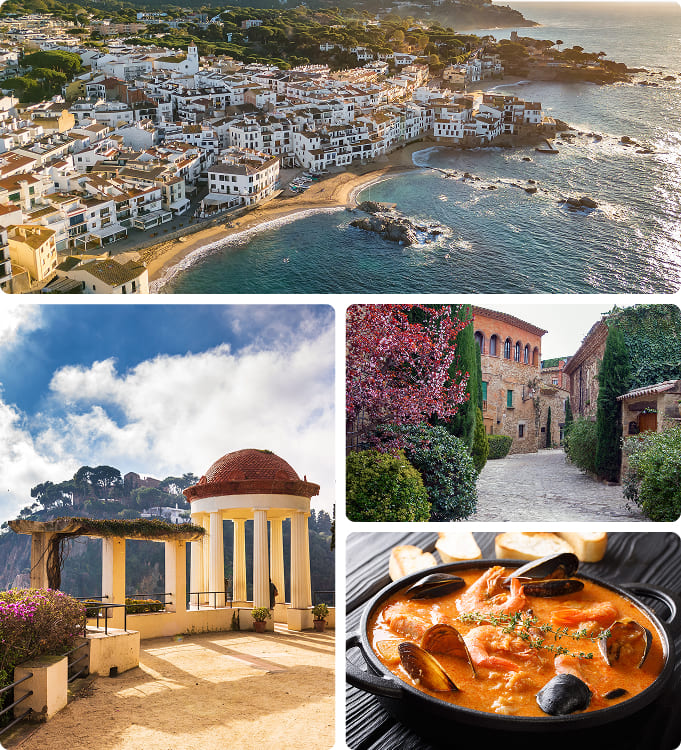
Along the coast, Calella de Palafrugell charms with white houses and fishing boats on the sand, while Begur’s castle looks out over the coastline. In Tossa de Mar, explore the Vila Vella, whose medieval walls rise above the sea. For a different kind of history, visit the Gala Dalí Castle in Púbol, an imaginative retreat Dalí created for Gala. On a clear day, the climb to Montgrí Castle is more comfortable in the cool weather, with sweeping views across the Empordà and the Medes Islands.
In Blanes, stroll through Marimurtra Botanical Garden and pause at the Templet de Linné, perched above the Mediterranean. Its outlook is a memorable reward for a relaxed visit.
Beaches we think you'll like:
The coast is just as appealing when swimming gives way to walking and sea watching. Calella de Palafrugell is ideal for a gentle waterfront stroll, with its whitewashed houses and boats making a lovely backdrop, while the coves around Begur offer a wilder feel and clear views across the water.
For a walk that combines several coastal moods, follow the Camí de Ronda from la Fosca to Platja de Castell near Palamós. The route passes cala s'Alguer, where fishermen’s cottages add a distinctive touch to the shoreline. Go in the morning for a peaceful ramble, or later in the day when the light softens over the sea.
Family-friendly activities:
A family day can start with an easy stretch of the Camí de Ronda, keeping the walk short and stopping often to watch the waves or explore a small cove. Near L’Estartit, the wetlands of Basses d'en Coll are a gentler outing: follow the paths on foot or by bike and look for waterbirds, especially towards sunset.
For a more active adventure, cycle a section of the roughly 100-kilometre Greenway between Olot and Sant Feliu de Guíxols, following the old railway route through changing landscapes from mountain country towards the coast. Older children and adventurous adults might also enjoy the wind tunnel at Empuriabrava, while a balloon flight over the Empordà offers an unforgettable early start.
Local delicacies you have to try:
The table changes with the season. From January to March, the Garoinada de Palafrugell celebrates sea urchins in Palafrugell, Calella, Llafranc and Tamariu. Along the coast, look out for suquet de peix and Palamós prawns; inland, try Pals rice or mar i muntanya, a characterful pairing of seafood and meat.
Autumn brings wild mushrooms, while colder days are made for comforting dishes such as goose with turnips. In Peratallada, family-run Can Bonay has served Empordà cooking since 1936 and is known for its goose and game dishes. In Palamós, La Salinera, recognised with a Michelin Bib Gourmand, makes the day’s fish and seafood the focus. Finish with crema catalana and a glass of Empordà wine.
Make the most of your visit:
The Costa Brava makes a rewarding base for days out, whether you’re drawn to city streets, Dalí’s world or ancient history. Approximate driving times below are from Palamós and can vary with traffic and your exact starting point.
- Girona (around 45 minutes): explore the Jewish Quarter, the cathedral and the colourful houses along the Onyar.
- Figueres (around 1 hour): visit the Teatre-Museu Dalí, part of the Dalí triangle with Púbol and Portlligat.
- Sant Pere de Rodes (around 1 hour 20 minutes): discover a Romanesque monastery with views towards Cap de Creus.
- Empúries (around 50 minutes): wander through Greek and Roman ruins beside the sea.