Cambrils: Where Pirates, Fine Dining and Hidden Stories Meet
Cambrils is much more than sun and beach. Discover a destination where pirate legends, haute cuisine and exotic gardens blend into one fascinating Mediterranean escape. Here are some of its most surprising secrets:
- The “Torre del Port” is not a lighthouse (even if it looks like one)
Many visitors mistake it for a lighthouse because of its round shape and seaside location. In reality, it is a 17th-century defensive tower built to protect the town from Barbary pirate attacks. Today, it stands as one of Cambrils’ most photographed landmarks and hosts maritime history exhibitions.
- A gastronomic capital with stars
Despite its small size, Cambrils is proudly known as the Gastronomic Capital of the Costa Dorada. Its reputation goes far beyond fresh fish: for decades, Michelin-starred restaurants have flourished here — something truly exceptional for a town of this scale. Don’t leave without tasting the famous fideus rossos, the local seafood specialty.
- El Parc Samà: A slice of Cuba in Tarragona
Just outside town, step into a historic garden straight out of a film set. Designed by Salvador Samà, Marquis of Marianao, it recreates the colonial Cuban atmosphere where his family once lived.
Bonus fact: A young Josep Fontserè, teacher of Antoni Gaudí, collaborated on the design. The pre-modernist influence is evident in its caves, waterfalls and romantic landscapes.
- La Torre de l'Esquirol: The 19th-century “telegraph”
Near the beach stands this slender tower, once a crucial part of the optical telegraph network linking Barcelona with Valencia and Madrid in the 19th century. Messages were transmitted through visual signals — mirrors and panels from tower to tower. It was the WhatsApp of its time, long before electric cables arrived.
- An air-raid shelter beneath your feet
In the heart of the old town (La Vila), explore a remarkably well-preserved Civil War shelter. Walk through the underground tunnels where locals once sought protection from bombings and experience a powerful piece of history firsthand.
Do not miss:
-
Pla de les Serenes: Along the promenade, admire the sculptures dedicated to fishermen. Look closely — the mermaids even have names: La Dolça and La Calma.
-
El Pino Redondo (Pi Rodó): Discover the centenary pine tree declared Local Heritage. So iconic that it gives its name to the neighborhood and remains a classic meeting point.
-
Two centers, one destination: Cambrils is divided into two distinct areas separated by one kilometer — La Vila, the medieval and agricultural heart inland, and El Puerto, the vibrant seaside district.
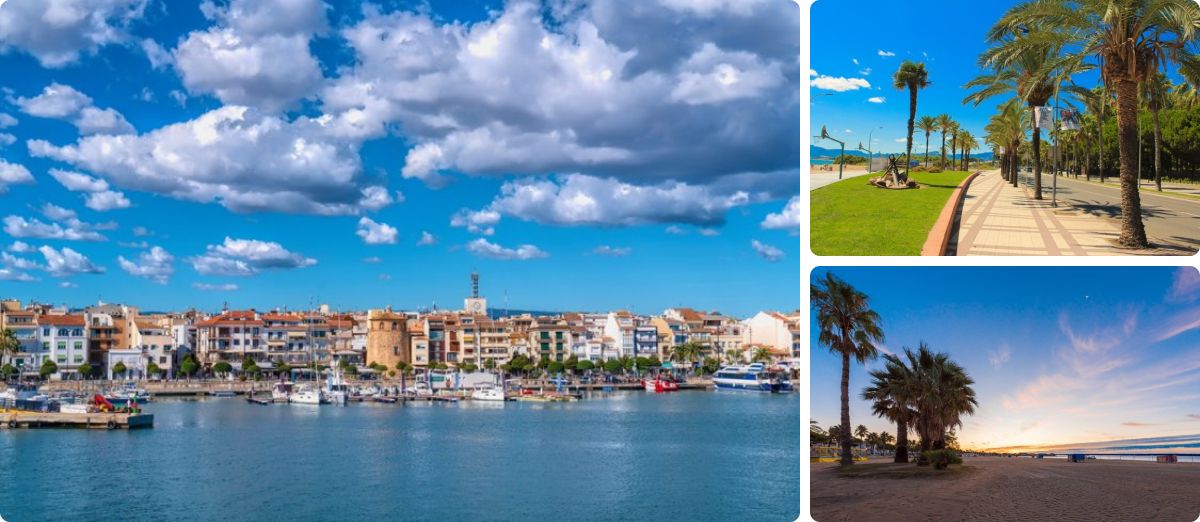
The Costa Daurada, Tarragona's "Golden Coast", owes its name to long beaches of fine golden sand lapped by calm, shallow water. Behind them lie UNESCO-listed Roman ruins, fishing towns where the day's catch still arrives at the harbour, and vineyards climbing into the hills. Its mild climate makes it inviting for much of the year.
It's a natural fit for families, with gentle beaches and one of Europe's leading theme parks on the doorstep, and just as rewarding for couples looking for seaside walks, long lunches and a touch of history. Salou and Cambrils make convenient bases for exploring it all.
Make sure you visit:
Start in Tarragona, once the Roman city of Tarraco. The amphitheatre sits right beside the sea, while the circus, the old walls and the cathedral in the Part Alta reveal almost two thousand years of history. Finish at the Balcó del Mediterrani, a viewpoint where locals touch the iron railing for good luck.
Back on the coast, Cambrils keeps its fishing port and relaxed seafaring character, perfect for an evening stroll. Inland, Reus, Gaudí's birthplace, rewards you with a trail of modernist buildings and a much-loved vermouth tradition, best enjoyed at midday in one of its squares.
Beaches we think you'll like:
In Salou, Platja Llarga lives up to its name with a long, quieter stretch of sand backed by pine trees, while the beaches of La Pineda offer plenty of space and shallow water for little ones. In Tarragona, Platja del Miracle lets you swim just below the Roman amphitheatre.
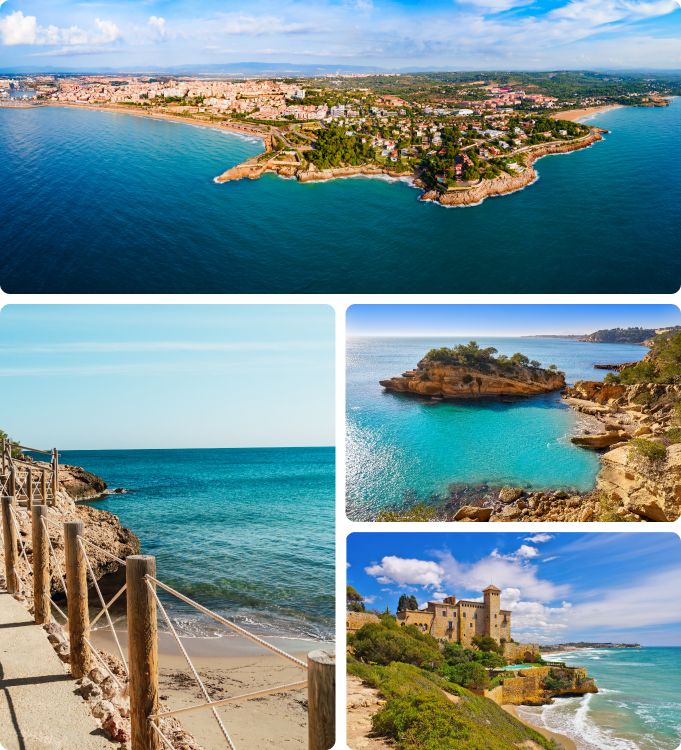
For a different side of the coast, walk Salou's Camí de Ronda, a seafront path linking small coves and rocky viewpoints. Further north, the beach below medieval Tamarit Castle is one of the most photogenic spots on the Costa Daurada.
Family-friendly activities:
A day at PortAventura World is a must for families, combining the theme park, Ferrari Land and a water park in one resort. Plan a full day there and save the next for a slower rhythm by the sea.
On quieter days, hire bikes and follow the seafront promenades at your own pace, or try paddle surfing or kayaking in calm water. Children also love watching the fishing boats in Cambrils harbour.
Local delicacies you have to try:
Cooking here looks to the sea. Order black rice, seafood rice or fideuà, made with short noodles instead of rice, and always ask for romesco, the local sauce of roasted peppers, almonds and garlic. In winter and spring, join a calçotada, where grilled spring onions are dipped in romesco and eaten by hand.
For a relaxed meal, El Llop de Mar in Cambrils serves fish and seafood from the town's fish market at very reasonable prices. For a special occasion, book a table at Can Bosch, also in Cambrils, which has held a Michelin star since 1984. Pair everything with wines from the Priorat or Montsant.
Make the most of your visit:
The Costa Daurada is a great base for day trips, from Cistercian monasteries to wild river deltas. Approximate driving times from Salou:
- Poblet Monastery (45 minutes): a UNESCO-listed Cistercian monastery, still home to a community of monks.
- Siurana (1 hour): a tiny clifftop village with sweeping views over the Priorat.
- Ebro Delta (1 hour): rice fields, wild beaches and flamingos.
- Barcelona (1 hour 15 minutes): a full day of culture, architecture and city life.



 Breakfast