Curiosities of Retamar - El Toyo
Retamar and El Toyo are two areas often mentioned together, yet they reveal distinct personalities. This is one of Almería’s most promising zones, shaped by the fusion of residential tradition and the modern energy of major international events.
-
The Mediterranean Games Legacy
El Toyo as you see it today was born from the Almería 2005 Mediterranean Games. The neighborhood was purpose-built to host the Mediterranean Village, welcoming elite athletes from around the world. Many of today’s upscale residential complexes were once home to sporting champions — a legacy that still defines its character.
-
A “Garden City” Concept
Unlike the historic center of Almería, El Toyo was designed with a low-density urban vision.
-
Green living: Kilometres of bike lanes and wide pedestrian promenades invite you to move freely and enjoy the outdoors.
-
Clean skyline: Much of the electricity and telecommunication infrastructure runs underground, creating an uncluttered, modern coastal landscape.
-
The Gateway to Cabo de Gata
Retamar stands as the literal entrance to the Cabo de Gata-Níjar Natural Park. It is the final urban hub before protected nature begins. Stay in a luxury hotel and, within five minutes by car, reach the untouched beauty of Las Amoladeras — an unbeatable strategic location.
-
Alborán Golf Course
El Toyo features an 18-hole, par-72 golf course that has become a regional benchmark. Designed with sustainability in mind, it incorporates native plant species and efficient irrigation systems adapted to Almería’s semi-arid climate.
-
The Origins of Retamar
While El Toyo represents 21st-century modernity, Retamar began expanding in the 1960s and 1970s. Initially conceived as a summer retreat for Almería’s affluent families seeking distance from the city’s bustle, it is now fully integrated into the metropolitan landscape.
-
A Privileged Microclimate
Thanks to its open bay location and surrounding orography, the area typically enjoys slightly warmer winters than the capital and a constant sea breeze that tempers the summer heat — a natural advantage you can feel year-round.

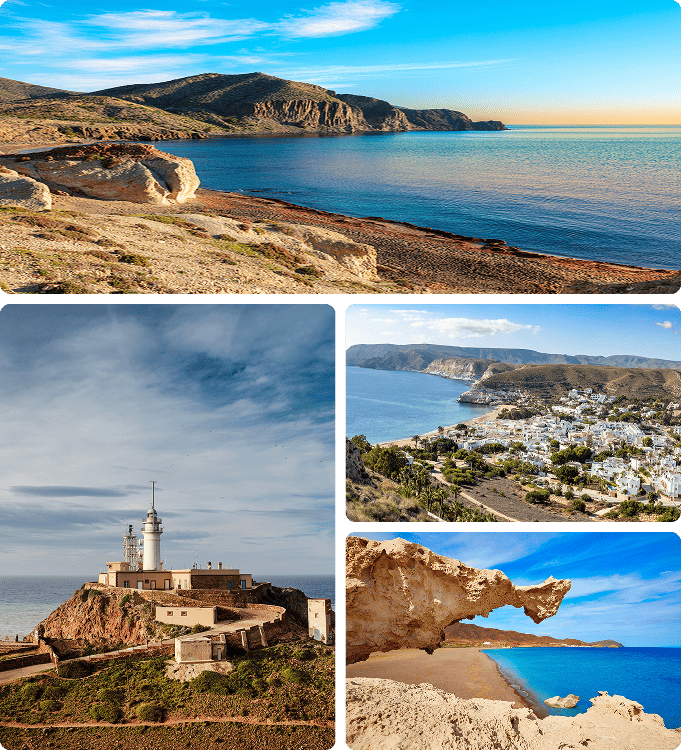
Cabo de Gata feels a world away from everyday life, even though it sits on Spain's sunny Almería coast. Here, in the far south-east of Andalucía, the Cabo de Gata-Níjar Natural Park brings together volcanic hills, turquoise coves and whitewashed fishing villages, in one of the wildest and most unspoilt stretches of the Mediterranean.
It's a place for slowing down: couples come for the quiet beaches and spectacular sunsets, families for the wide sandy bays and outdoor adventures, and walkers and snorkellers for some of the most striking scenery on the Spanish coast.
Make sure you visit:
Start at the Cabo de Gata Lighthouse, at the southern tip of the park. Right beside it, the Arrecife de las Sirenas, a cluster of ancient volcanic chimneys rising out of the sea, is one of the most photographed spots in the area, and late afternoon is the best time to see it glow. On the way back, stop at the salt flats, where flamingos often wade through the shallow lagoons.
Once you've explored the south, head north to the Mirador de la Amatista, a viewpoint perched high above the cliffs, and continue to Rodalquilar, a former gold-mining village with a quiet, almost cinematic feel. Round off the day in La Isleta del Moro, a tiny fishing village where boats rest on the sand and the sea views are hard to beat.
Beaches we think you'll like:
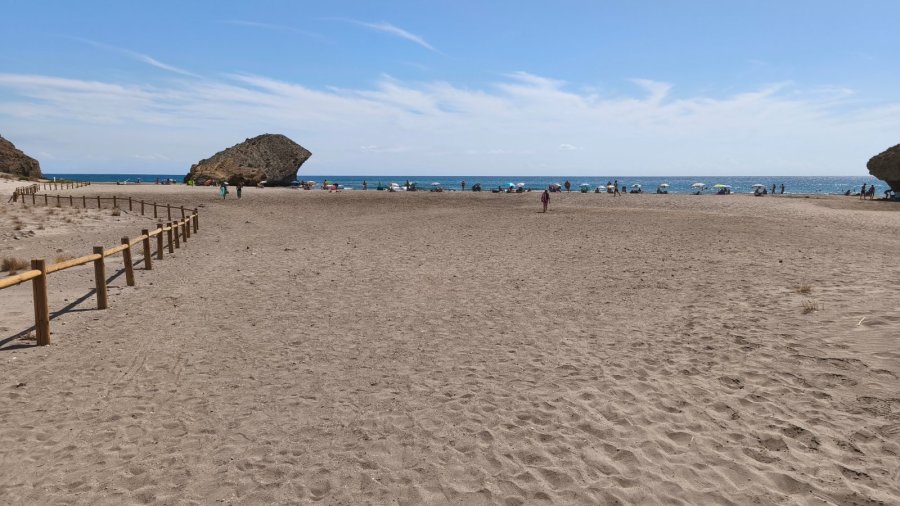
Each beach here has its own character. Playa de los Genoveses is a wide, unspoilt bay backed by dunes, with plenty of space for families to spread out. Just around the headland, Playa de Mónsul is famous for its sand dune and dramatic volcanic rocks, a great choice for a swim followed by a walk along the shore. In high season, car access to both is usually restricted, so arrive early or take the shuttle bus from San José.
Further north, near Carboneras, Playa de los Muertos is often described as one of Spain's most beautiful beaches, with turquoise water and towering cliffs. Reaching it involves a steep walk down, so it suits confident walkers best. For something calmer, El Playazo in Rodalquilar is an easy-going alternative to the busier coves.
Family-friendly activities:
A family day in Cabo de Gata could start with an easy walk along one of the park's coastal trails, with a new lookout over the sea at every bend. Then settle in at Genoveses for a lazy afternoon of swimming and sandcastles, and bring masks and snorkels: the clear, calm water close to shore is full of fish.
For a bit more adventure, hire kayaks and paddle along the coast to reach coves and caves you can't get to on foot. Pick a calm day and pack plenty of water and sun protection, especially in summer, as there's very little shade in the park.
Local delicacies you have to try:
Food in Almería is simple, generous and closely tied to the sea. Sit down at a seafront terrace and order freshly grilled fish or the prized red prawns, followed by a comforting arroz caldoso, a brothy rice dish made with the catch of the day.
For something more traditional, try gurullos, a small handmade pasta stewed with rabbit or cuttlefish, and don't skip a simple salad of local tomatoes, famous for their intense flavour. In La Isleta del Moro, La Ola serves fresh fish with views over the water, while El Gallinero de Pedro in Rodalquilar, recognised by the Guía Repsol, is a lovely spot for home-style cooking.
Make the most of your visit:
Cabo de Gata is a great base for exploring the rest of Almería province. A car makes it easy to get around, and these are our favourite day trips:
- Níjar (around 35 minutes): a whitewashed hill village known for its pottery and colourful rugs.
- Almería city (around 40 minutes): home to the impressive Alcazaba fortress and a lively old town.
- Mojácar (around 1 hour): a white village clinging to the hillside, perfect at sunset.
- Tabernas Desert (around 1 hour): often called Europe's only desert, where many classic westerns were filmed.